
Doctoral Defense – Chen Wang
SRL doctoral candidate defends his doctoral thesis.
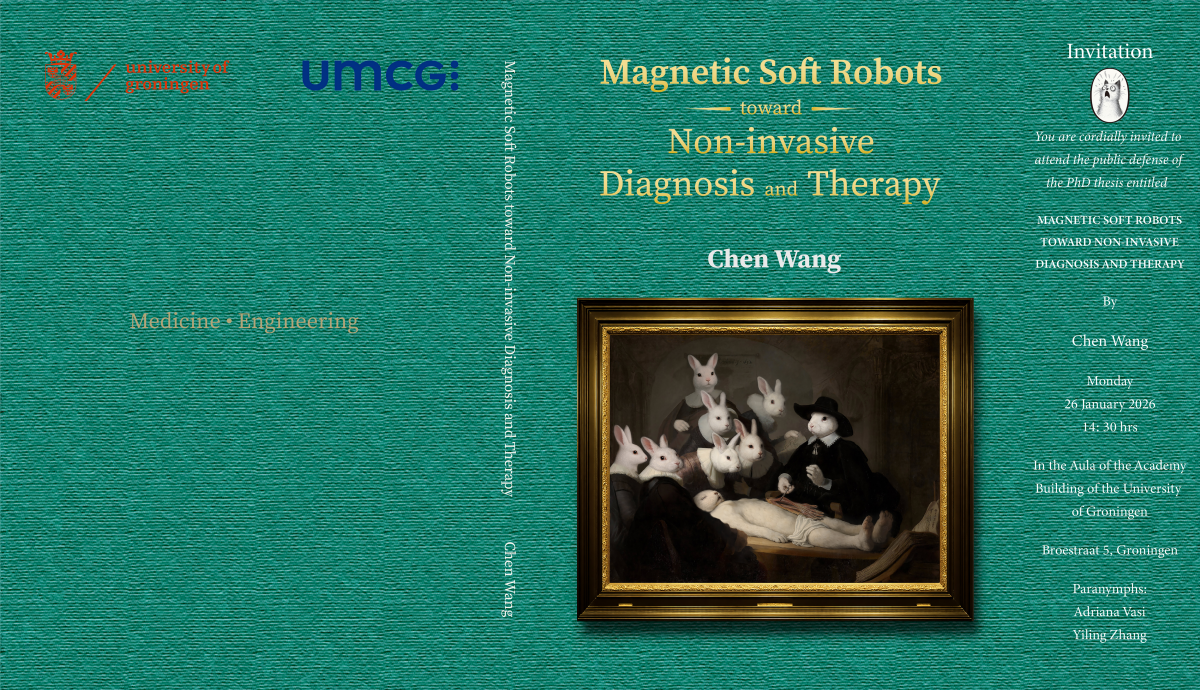
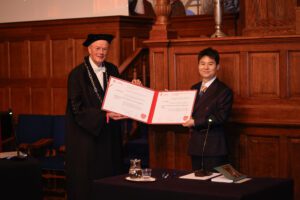
The defense of the doctoral thesis titled “Magnetic soft robots toward non-invasive diagnosis and therapy” by Chen Wang was held on Monday, 26th of January 2026, at 14:30 hours in the Aula of the Academy Building at the University of Groningen. The doctoral thesis isavailable here. Dr. Chen Wang conducted his research at the Surgical Robotics Laboratory at the Department of Biomaterials and Biomedical Technology.
Thesis summary:
Magnetic soft robots have emerged as promising platforms for biomedical applications owing to their miniature size, mechanical compliance, and wireless actuation capabilities. Their capacity to emulate natural locomotion and navigate through confined, dynamic, and heterogeneous environments positions them as ideal candidates for tasks such as targeted drug delivery, minimally invasive diagnostics and interventions, and in vivo sensing. Recent studies have demonstrated significant potential in achieving multimodal locomotion and integrating medical functionalities. Nevertheless, the clinical translation of these systems necessitates a more comprehensive understanding of their environmental adaptability, multifunctionality, and integrated sensing performance.
This dissertation addresses these challenges by advancing the design and functionality of magnetic soft robots through a series of application-oriented studies. Chapter 2 focuses on motion mode switching in complex environments under simple magnetic actuation. A fin-wave-inspired robot with amphibious locomotion is introduced, capable of navigating both dry surfaces and wet environments using magnetically driven undulating legs. Chapter 3 explores bioinspired locomotion combined with biodegradable materials for drug delivery. A multi-segmented, degradable robot is proposed, capable of navigating tortuous lumens and releasing drug payloads. Chapter 4 addresses the challenge of stable locomotion in biological environments. It presents a ring-shaped robot with controllable surface adhesion, performing manipulation and transport tasks on mucus-lined surfaces. These developments illustrate how locomotion strategies and material functionalities can be synergistically integrated to enable diverse biomedical applications.
Chapters 5 and 6 expand the functional scope of magnetic soft robots. Chapter 5 introduces a dual-responsive system combining magnetic shape programming with temperature-triggered actuation. This enables precise control over gripping, releasing, and reconfiguration—capabilities particularly useful for drug delivery. Chapter 6 presents SeroTab, a sensorized, ingestible soft robot for in vivo pH monitoring and gastric fluid sampling. With its penguin-inspired locomotion and hydrogel-based sensing, 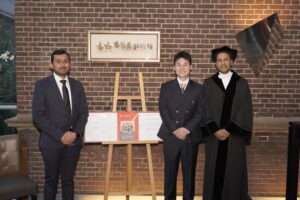 SeroTab successfully demonstrates real-time physiological monitoring and molecular diagnostics in animal models. These studies highlight the importance of integrating sensing capabilities into soft robots to enable closed-loop control and autonomous function in complex biological settings.
Finally, Chapter 7 summarizes the core findings of this dissertation, emphasizing an application-driven strategy for advancing magnetic soft 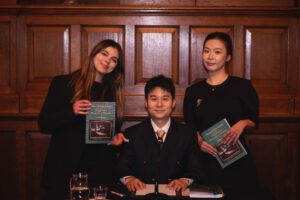 robotics in terms of locomotion, functionality, and sensorization. A key contribution is the successful in vivo validation of a fully integrated soft robotic system, demonstrating its potential for physiological sensing and therapeutic tasks within living organisms. This achievement not only marks a significant step toward clinical translation but also lays a foundation for the development of disease-targeted soft robots with clinically relevant functionalities. By bridging synthetic engineering with biological insight, this research paves the way for the next generation of smart, minimally invasive robotic platforms for precision diagnostics and therapy.
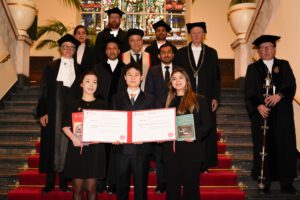
Promotor
- Prof. Dr. S. Misra (University of Twente/University Medical Center Groningen, The Netherlands)
Supervisor
- Dr. V. K. Venkiteswaran (University of Twente, The Netherlands)
Assessment Committee
- Prof. Dr. P. Breedveld (Delft University of Technology)
- Prof. Dr. G. Tuijthof (University of Twente)
- Prof. Dr. A. G. P. Kottapalli (University of Groningen)
Opposition Committee
- Prof. Dr. P. van Rijn (University of Groningen and University Medical Center Groningen)
- Dr. Bahar Haghighat (University of Groningen)